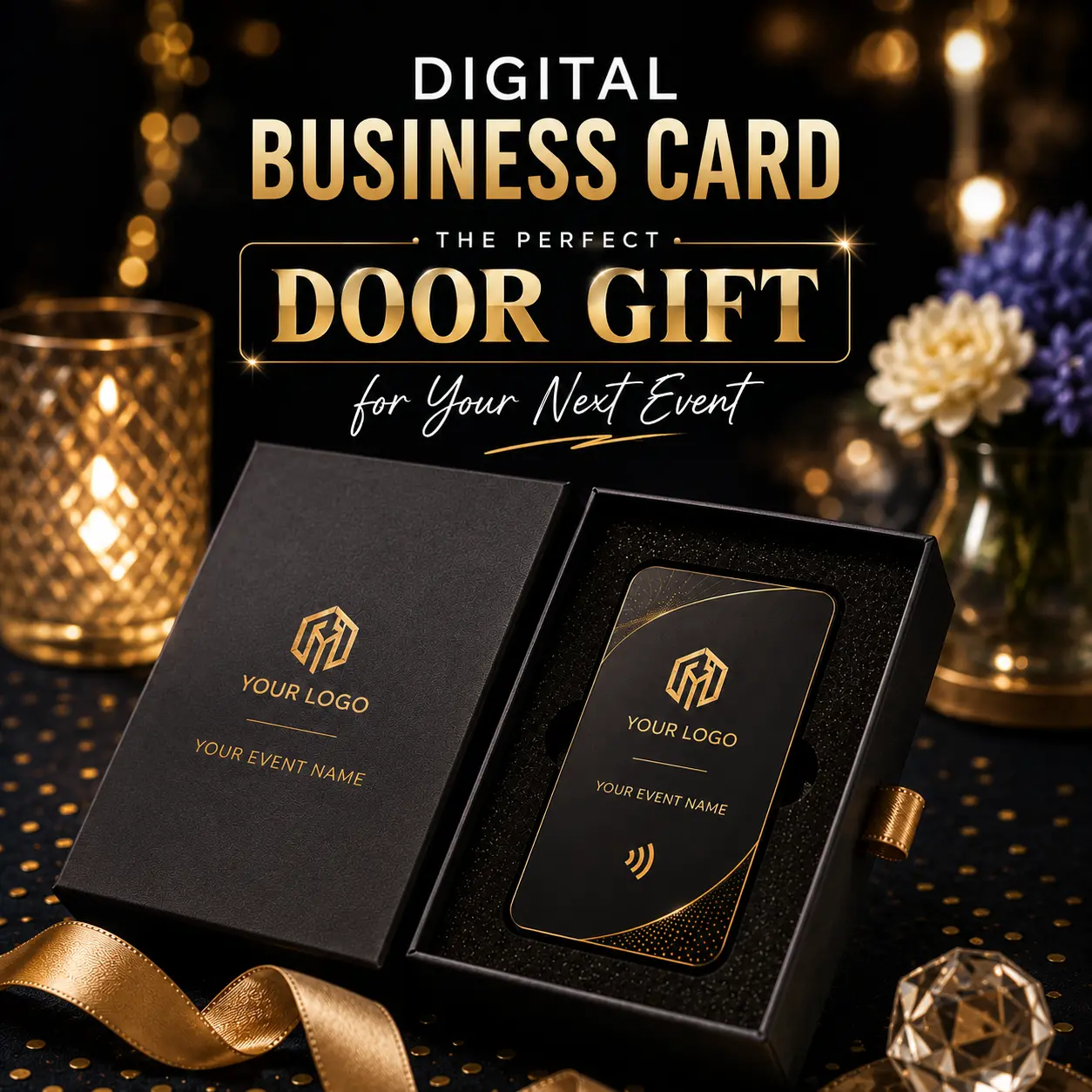
The Smarter Choice for Corporate Event Door Gifts
A memorable corporate event is about creating an experience that continues long after the event has ended.
One detail that often leaves a lasting impression is the door gift. While traditional gifts are appreciated, today's organizations are increasingly looking for something that is practical, meaningful, and continues to deliver value.
Digital Business Cards are becoming a modern alternative that combines premium gifting with long-term usability.
Unlike conventional souvenirs that may eventually be forgotten, a Digital Business Card remains useful long after the event.
Recipients can instantly share their contact information, company profile, website, social media, portfolio, and more with a simple NFC tap or QR code scan. As their information changes over time, they can simply update their digital profile without replacing the physical card.
This transforms a one-time event gift into an everyday networking tool.
Designed to Fit Different Types of Events
One of the biggest advantages of Digital Business Cards is their flexibility. The same platform can be adapted to suit different event objectives.
Internal Corporate Events
Whether it's a sales convention, agent conference, distributor meeting, dealer gathering, franchisee event, leadership summit, internal networking session, or corporate training programme, Digital Business Cards ensure every representative carries a consistent and professional company identity.
Each card can be pre-loaded with the company's official profile, product information, website, social media, catalogues, and promotional materials. This enables employees, agents, distributors, dealers, and business partners to confidently share accurate, up-to-date information while strengthening brand consistency across the entire network.
Whenever company information or marketing materials are updated, the digital content can be managed centrally without replacing the physical cards, making them a long-term communication and networking tool.
Public Events, Conferences & Networking Sessions
For events where participants come from different companies or industries, each recipient can activate and personalise their own Digital Business Card.
They can create their own digital profile by adding their:
- Personal information
- Company details
- Website
- Social media links
- Portfolio
- Other professional information
The physical card becomes a personalised networking tool that reflects each individual's professional identity.
Grows Together with the User
A Digital Business Card is not limited to the information created on the first day.
Recipients can activate and personalise their digital profile during the event itself, allowing them to start exchanging contact information and networking immediately.
As their careers progress, they can update their profile anytime, whether they change companies, launch a new business, expand their services, or build their personal brand. Their contact information, social media, portfolio, website, and other professional details can all be kept up to date without replacing the physical card.
Additional features and higher-tier plans can also be added whenever needed, ensuring the Digital Business Card continues to grow alongside the user and remains a valuable networking tool for years to come.
A Smarter Investment for Event Organisers
Choosing a door gift is no longer just about giving attendees something to take home. It's about providing something they will continue to use.
Whether it's a corporate event with a unified company profile or a public event where every participant creates their own digital identity, Digital Business Cards offer flexibility that traditional door gifts simply cannot provide.
They combine premium presentation, practical functionality, and long-term value, helping event organizers deliver a memorable experience while giving every attendee a tool that remains useful well beyond the event itself.
 VMAX CONCEPT GROUP SDN BHD